
Insights and Publications

Research notes for biological decisions.

BIODIRECTIVE uses this page as a public research foundation: peer-reviewed work, practical frameworks, and technical notes that show how biological questions can be tested, interpreted, and turned into usable direction.

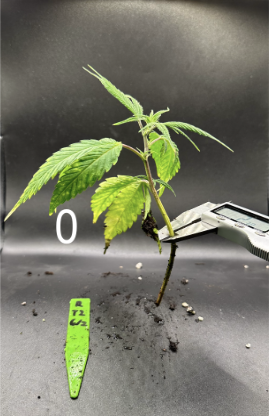
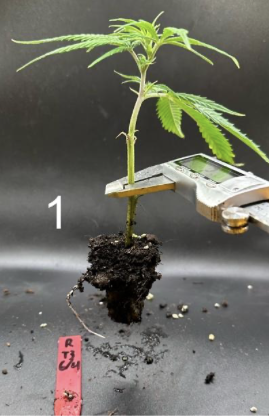
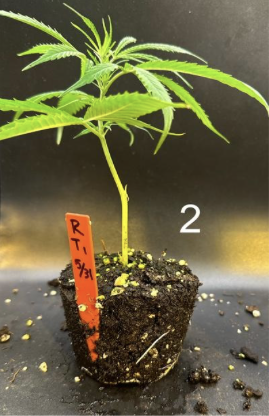
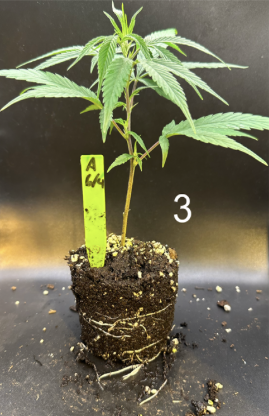
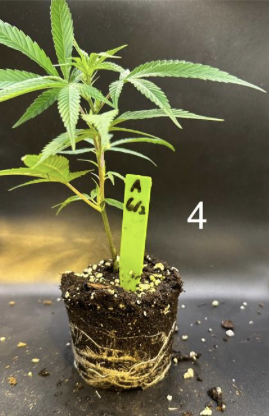
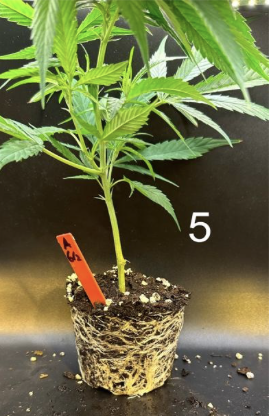
Cannabis sativa propagation measurement panel 0 from founder research Cannabis sativa propagation measurement panel 1 from founder research Cannabis sativa propagation measurement panel 2 from founder research Cannabis sativa propagation measurement panel 3 from founder research Cannabis sativa propagation measurement panel 4 from founder research Cannabis sativa propagation measurement panel 5 from founder research
Publication photographs by Matthew Weingarten from the peer-reviewed study.

Editor's Choice - Peer-Reviewed

Cannabis propagation research.

A multi-experiment study selected as an Editor's Choice article, comparing aeroponic, rockwool, and horticultural-foam propagation systems across two cultivars, examining transplant timing, spray intervals, and reservoir nutrient concentrations in controlled-environment cannabis propagation.

Weingarten, M., Mattson, N., and Grab, H. MDPI Plants, Vol. 13, No. 9, 1256, 2024. DOI: 10.3390/plants13091256.

Read the publication

Technical Notes

How BIODIRECTIVE turns observations into usable direction.

These short frameworks show the kind of thinking that can become private reports, buyer summaries, white papers, publication pathways, or future public notes when the work is strong enough to share.

01

Signal is not proof until the context is controlled.

A crop response means little without the surrounding conditions: cultivar, crop stage, environment, substrate, irrigation timing, labor practice, pest pressure, and measurement method.

02

A useful trial starts with the decision it must improve.

The question is not only whether something changed. The better question is whether the change is strong, repeatable, and relevant enough to support adoption, revision, retesting, or rejection.

03

Market language should be built after the evidence is bounded.

Buyer-facing claims are strongest when supported findings, preliminary signals, unresolved variables, and review-sensitive language are separated before promotion begins.

04

Commercial research can become publishable only when the structure is there early.

Controls, replication logic, data hygiene, photography, figure planning, and interpretation standards determine whether strong internal work can support a white paper or manuscript path.

Evidence Translation

Frameworks for clearer evidence decisions.

Claim Boundaries

Separate signal from unsupported language.

Clarify supported findings, preliminary observations, unresolved variables, and language that needs regulatory or counsel review.

Site Readiness

Define the conditions before testing begins.

Identify what a facility must document before a product, technology, or method trial can produce interpretable results.

Measurement Discipline

Build the baseline before judging response.

Use environmental, crop, root-zone, image, and operational data to make controlled-environment validation more useful.

Publication Pathway

Structure commercial work for stronger outputs.

Design studies so strong data may support white papers, technical reports, publication pathways, or peer-reviewed manuscripts.

Output Anatomy

A defensible report answers more than “did it work?”

A strong output should make the decision path legible. It should show what was tested, why the setup was fair, where the result is useful, and what still cannot be claimed.

Decision Context
What choice will this work support: adopt, revise, retest, scale, publish, or stop?
Control Logic
What comparison makes the result meaningful under the real crop, facility, or product conditions?
Measurement Set
Which crop, environment, root-zone, quality, labor, safety, or economic signals matter?
Claim Boundary
What can be said now, what is preliminary, and what needs additional review before being used publicly?

Decision Pathways

Examples of how a question becomes a decision.

Concrete work starts by naming the decision, then building the measurements, limits, and output around that decision. These examples show how different inquiries can become structured evidence work.

Product Validation

Can this input or technology justify adoption?

Measure: crop response, untreated or current-practice controls, labor effect, safety, repeatability, and commercial relevance.

Output: adoption recommendation, claim boundary, buyer summary, and retest conditions.

Facility Optimization

Where is the system limiting performance?

Measure: irrigation behavior, dryback, EC, climate, canopy position, root-zone response, workflow, and crop quality.

Output: bottleneck map, intervention plan, monitoring standard, and decision sequence.

Research Output

Can internal work become a stronger report?

Measure: controls, replication logic, data hygiene, image documentation, figure readiness, and interpretation discipline.

Output: technical report, white-paper outline, manuscript pathway, or private evidence package.

Market Confidence

What can be said without overstating proof?

Measure: supported findings, preliminary signals, unresolved variables, review-sensitive language, and buyer needs.

Output: approved sales language, evidence summary, diligence packet, and excluded-claim list.

Use Examples

Real questions worth structuring carefully.

These are examples of the kinds of applied questions that can become trial architecture, technical reports, protected evidence packages, or future public notes when the data are strong enough.

Propagation

Which rooting system performs best under defined conditions?

Compare timing, root quality, transplant readiness, labor, crop safety, and cultivar or facility dependency.

Root Zone

What is the resource-uptake story behind the crop response?

Connect dryback, EC, irrigation behavior, substrate response, root morphology, crop performance, and operational decision value.

Lighting

Does a lighting change improve the outcome that matters?

Evaluate PPFD or DLI distribution, canopy response, morphology, quality, energy context, and implementation constraints.

Inputs

Is a biological input creating signal or noise?

Test biostimulants, nutrients, crop-protection tools, fungal systems, or specialty inputs against controls and clear measurement criteria.

Facility Readiness

Can the site support a defensible trial?

Review layout, irrigation zones, sensor reliability, environmental records, bench access, labor workflow, and contamination or drift risks.

Health Context

Where should biological relevance stop short of a medical claim?

Separate plant, product, patient, clinical, regulatory, and institutional boundaries before public or partner-facing language is written.

Editorial Standard

What every output should make clear.

Question

What decision is this evidence meant to improve?

Each output starts with the decision context so the writing does not drift into interesting but unused science.

Boundary

What can be said responsibly?

Evidence is separated into supported findings, preliminary observations, unresolved variables, and language that needs review.

Standard

What would make the work stronger?

The work names the controls, measurements, replication, site context, or specialist review needed before confidence increases.

Use

Who should act on it?

Outputs are written for founders, growers, research teams, physicians, investors, and technical buyers who need different levels of proof.

Publication Path

Translate strong work into defensible outputs.

Discuss evidence outputs